886-3-5326151



Interventional pulmonology
Academic research achievements Click here
FB fanpage Click here
Interventional pulmonology is a new field in chest medicine. At our hospital, pulmonologists and chest surgeons collaborate to perform advanced diagnostic and treatment techniques for lung diseases. We use a combination of bronchoscopic, transthoracic, and surgical methods.
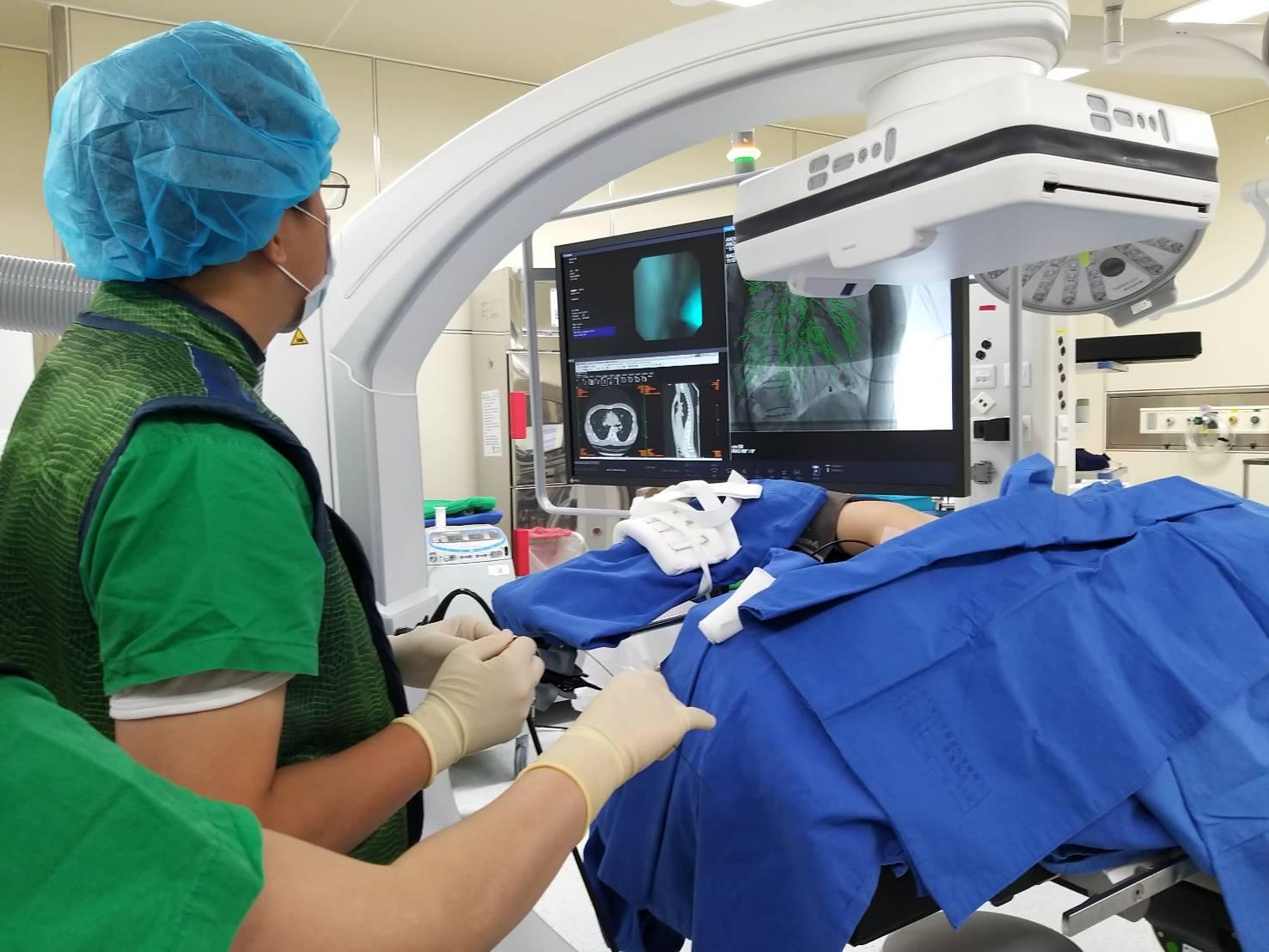
Our procedures include bronchoscopy-guided lung biopsy, transbronchial needle aspiration, pleuroscopy, and various ablation techniques. We offer a “one-stop” procedure for lung nodules, combining tumor localization and surgical resection in one session, reducing time lag and complications.
Many procedures are guided by augmented fluoroscopy, improving tissue yield, especially for peripheral lung lesions. We also perform transthoracic biopsies and ablations with iGuide assistance, often under general anesthesia. This multimodal approach enhances precision in diagnosis and treatment.
Benefits of the procedure:
Thoracic surgery can remove the lesions within the chest. The benefits and likelihood of successful treatment vary depending on the type of surgery, and some examples are as follows:
Thoracic surgery for pneumothorax is expected to reduce recurrence rate by 20%.;
Thoracic surgery for early-stage lung cancer can achieve a 5-year survival rate of up to 90%.;
Esophageal cancer surgery performed with thoracoscopy can increase the postoperative extubation success rate to 90%.
Risks of the procedure:
Surgical Risks: Complications and unexpected situations that may occur during or after surgery.
Anesthesia:
General anesthesia will be administered during the surgery, and postoperative pain management will involve self-controlled analgesia or oral and injectable pain medication. Common anesthesia-related issues include nausea, vomiting, generalized soreness, throat discomfort, and hoarseness. Occasionally, dental and lip injuries may occur. Severe complications such as respiratory distress, stroke, or myocardial infarction are rare and typically occur in patients with poor preoperative lung function, advanced age, obesity, smoking, heart disease, diabetes, kidney disease, hypertension, and other significant medical conditions.
General surgical risks:
Some complications can occur in all types of surgeries, including thoracic surgery. These complications may include lung infections, deep vein thrombosis with a small risk of pulmonary embolism, and insufficient blood flow leading to stroke or cardiac ischemia.
Specific risks associated with thoracic surgery may include: